

In Good Health

6 Fruits That Support Sperm Health: A Natural Guide to Fatherhood
The journey to fatherhood is one of the most rewarding paths a man can take, but for many, the road isn't always a straight line. If you are facing challenges with conception, know that you are not alone. Millions of men look for answers every year, and the good news is that there are many proactive, natural steps you can take to improve your odds. While genetics play a role, your lifestyle, specifically your diet, is a powerful engine for change. Nature provides us with incredible resources to optimize our bodies. By incorporating specific foods to help sperm health into your daily routine, you can actively improve the quality, count, and motility of your swimmers. Below, we break down the science behind the fruits that help sperm health, based on our latest infographic. Pomegranates: The Antioxidant Powerhouse When looking for solutions to male fertility, you cannot overlook the pomegranate. This vibrant fruit is packed with antioxidants which are essential for fighting oxidative stress in the body. According to research, pomegranates can help improve overall sperm quality. Whether you eat the seeds fresh or drink pure pomegranate juice, you are fueling your body with the nutrients it needs to protect your reproductive system. Citrus Fruits: Vitamin C for Motility If you want to increase sperm health, particularly motility (the sperm's ability to swim), reach for citrus. Lemons, oranges, and grapefruits are loaded with Vitamin C. This isn't just for fighting colds; Vitamin C is a critical nutrient that enhances sperm motility. A glass of lemon water in the morning is a simple, refreshing habit that supports your fertility goals. Avocado: Folate and Healthy Fats Avocados are often called a superfood, and for good reason. They are rich in folate and healthy plant-based fats. Folate is vital for DNA synthesis and supports overall reproductive health. By ensuring you have adequate folate levels, you are helping to ensure the genetic integrity of your sperm. Adding avocado to your toast or salads is one of the most delicious ways to support your body. Berries: Fighting Stress and Damage Blueberries, blackberries, and raspberries are tiny but mighty defenders of male fertility. They provide a dense source of antioxidants and anti-inflammatory phytonutrients. These compounds fight systemic stress and protect sperm cells from damage caused by free radicals. Think of berries as a shield, safeguarding your fertility against environmental toxins. Bananas: Boosting Testosterone Naturally Bananas offer a unique benefit in the realm of male fertility. They contain an enzyme called Bromelain. This rare enzyme is known to help regulate sex hormones and can naturally boost testosterone levels. Furthermore, bananas are rich in Vitamin B1, which supports stamina and energy—essential components for the conception process. Tomatoes: Lycopene for Count and Morphology Tomatoes contain a powerful compound called Lycopene, which gives them their red color. Lycopene has been extensively studied for its ability to improve sperm count and morphology (the shape and structure of the sperm). Improved morphology ensures that sperm can penetrate the egg more effectively. Pro-tip: Cooked tomatoes (like in sauces) release more absorbable Lycopene than raw ones. A Holistic Approach: Diet and The Best Underwear for Male Fertility Eating the right fruits that help sperm health is a massive step in the right direction, but fertility is a holistic game. Heat is the enemy of sperm production. If your body temperature is too high "down there," even the best diet won't reach its full potential. To maximize your results, pair your new nutrition plan with the right gear. Wearing the best underwear for male fertility, designed to keep the testicles cool and unconstricted, works hand in hand with your diet. By cooling the area and feeding your body the right nutrients, you are creating the ultimate environment for conception. At Fertile Fruit, we believe in providing you with the hope and the tools you need to succeed. Eat well, stay cool, and trust the process.
Learn moreThe Ultimate Pre-Conception Checklist for Men
Embarking on the journey to parenthood is an exciting time, and it’s a journey that involves both partners equally. While much of the focus is often placed on female fertility, male health plays a critical 50% role in conception. Taking proactive steps to optimize your fertility can significantly improve your chances of starting a family. This pre-conception checklist for men covers the essential areas you should focus on, from lifestyle adjustments to the clothes you wear. Understanding the Signs of Male Infertility Before diving into improvements, it’s helpful to be aware of potential red flags. The signs of male infertility are not always obvious. For some men, they can include issues with sexual function (like difficulty with ejaculation or low libido), pain or swelling in the testicular area, or respiratory infections. Hormonal imbalances can also be a sign, potentially leading to decreased facial or body hair. However, for many men, there are no outward signs at all. The only true indicator is the inability to conceive after a year of trying. This is why being proactive about your health is one of the most powerful ways to improve male fertility, even if you don't suspect any issues. Natural Remedies for Male Infertility and Lifestyle Tweaks The good news is that sperm health can be significantly influenced by your habits. Adopting a healthier lifestyle is one of the most effective natural remedies for male infertility. Start with regular, moderate exercise—activities like jogging, swimming, or cycling can boost antioxidant enzymes, which protect sperm. It’s also crucial to manage stress, as high levels of the stress hormone cortisol can negatively impact testosterone and sperm production. Prioritize getting 7-9 hours of quality sleep per night, as this is when your body regulates key reproductive hormones. Lastly, avoid toxins like tobacco, excessive alcohol, and illicit drugs, as they are well-known to damage sperm quality and quantity. Fuel Your Body to Increase Sperm Volume What you eat directly impacts your sperm. To increase sperm volume and improve overall quality, focus on a diet rich in antioxidants, vitamins, and minerals. Foods packed with Vitamin C (citrus fruits, bell peppers), zinc (oysters, pumpkin seeds), selenium (Brazil nuts, fish), and folate (leafy greens, beans) are fantastic for sperm health. Omega-3 fatty acids, found in walnuts and fatty fish like salmon, are also crucial for the formation of healthy sperm cells. Think of your diet as the fuel for your future family—give your body the premium nutrients it needs to perform at its best. The Underwear Debate: Choosing the Best Underwear for Male Fertility It might seem like a minor detail, but what you wear can make a difference. The testes are located outside the body for a reason: they need to stay slightly cooler than the core body temperature for optimal sperm production. Tight-fitting underwear can press the scrotum against the body, raising the temperature and potentially hindering sperm development. This is where choosing the right male fertility underwear comes in. The best underwear for male fertility are typically loose-fitting styles like boxers or relaxed-fit boxer briefs made from breathable fabrics like cotton or modal. This sperm friendly underwear allows for better air circulation, helping to maintain the ideal cooler temperature needed for healthy sperm production. Making these changes is an empowering way to take control of your fertility journey. By following this checklist, you are not just improving your own health, but you are making a vital investment in the future of your family.
Learn moreA Team Approach: How to Talk to Your Partner About Male Factor Infertility
The fertility journey is a path you walk as a couple, but opening up about male infertility can feel like one of the loneliest steps. It’s a conversation filled with emotion, vulnerability, and fear. However, approaching it with empathy and teamwork can strengthen your bond and turn a challenge into a shared mission. Here’s how to start that important conversation. Set the Stage for Connection Before you say a word, choose the right time and place. Don't bring it up after a long, stressful day or five minutes before you need to rush out the door. Find a calm, private moment where you won’t be interrupted. Making a cup of tea or going for a quiet walk can create a comfortable atmosphere, signaling that you want to connect and talk about something important without pressure. Frame It as "Our" Journey One of the biggest hurdles for men struggling with fertility is the feeling of personal blame. When you talk to your partner, consciously use words like "we," "us," and "our." Instead of saying, "I have a low sperm count," try, "It looks like we have a hurdle to overcome on the male side." This simple shift in language frames male infertility not as one person's problem, but as a shared challenge you will face together, reinforcing that you are a team. Share Your Feelings, Not Just the Facts It’s easy to hide behind the clinical details of a diagnosis. But your partner needs to know how you feel. Are you scared? Disappointed? Frustrated? Sharing your emotions invites your partner in and gives them permission to share theirs, too. This vulnerability builds intimacy and ensures you’re not just problem-solving, but emotionally supporting one another through a difficult time. Acknowledging the emotional weight is a powerful form of male fertility support within your relationship. Focus on Proactive Next Steps, Together After you’ve shared the news and your feelings, gently pivot the conversation toward action. This shows you’re committed to moving forward. You can say, "I've been researching ways we can tackle this. There are lifestyle changes, supplements, and even simple things like wearing male fertility underwear to help create a better environment." By presenting solutions, you transform the conversation from one of despair to one of hope and collaboration, empowering both of you to take the next steps as a united front.
Learn more
The Science of Scrotal Temperature: Why the Best Underwear for Male Fertility Matters
When trying to start a family, many men focus on major lifestyle changes. But what if one of the most impactful adjustments for men's fertility is also one of the simplest? The science is clear: temperature plays a huge role in sperm production, and your choice of underwear is a key player. Understanding this connection is the first step toward optimizing your reproductive health. The Biology Behind Finding the Best Underwear for Male Fertility The testicles produce sperm through a delicate process called spermatogenesis, which functions best at a temperature of approximately 34∘C (93.2∘F)—a few degrees cooler than the rest of the body. This is precisely why they are located outside the body cavity. When scrotal temperature rises, it can create an environment hostile to sperm development, potentially impairing sperm motility (movement) and morphology (shape). Consistently maintaining a cooler environment is a non-negotiable factor if you want to increase sperm health. The quest for the best underwear for male fertility is really a quest for better temperature regulation. How Male Fertility Underwear Choices Affect Temperature This is where the classic "boxers or briefs" debate becomes critical. Tighter-fitting styles, such as briefs and many boxer briefs, press the testicles against the body. This action traps heat, disrupting the body's natural cooling mechanism and potentially elevating the scrotal temperature into a range that compromises sperm production. Studies on boxer briefs and sperm count have suggested that men who wear looser-fitting underwear, like boxers, often have a higher sperm concentration. The right male fertility underwear allows for airflow and space, helping maintain that crucial lower temperature. Simple Steps to Increase Sperm Count with the Right Underwear Making a change is straightforward. To support your body’s natural sperm production, opt for loose-fitting boxers made from breathable fabrics like cotton. This simple switch helps reduce heat buildup throughout the day. While it's not a magic bullet, choosing the right underwear is a powerful and easy step to increase sperm count and support your overall fertility goals. By combining this change with a healthy diet and lifestyle, you are creating the optimal conditions for conception.
Learn more
The Best Underwear for Men's Fertility: Boosting Sperm Motility with Fertile Fruit Boxers
When you and your partner are having trouble conceiving, it’s natural to look at every aspect of your health. While diet, exercise, and stress play significant roles, many men overlook a critical factor sitting in their top drawer: their underwear. The right choice can be a powerful tool to increase fertility in men, and that’s where Fertile Fruit boxers make a difference. Let's explore how a simple switch can have a profound impact on sperm health. The Link Between Heat and How to Increase Your Sperms' Health One of the biggest enemies of healthy sperm is excess heat. Your testicles are designed to hang outside the body for a reason—to maintain a temperature slightly cooler than your core body temperature. This optimal environment is crucial for both sperm production and motility. Tight, non-breathable underwear traps heat, creating a warmer environment that can significantly impair sperm function. Scientific studies have repeatedly shown a link between increased scrotal temperatures and decreased sperm quality, making underwear choice a critical step in your fertility journey. Fertile Fruit Boxers: The Ultimate Fertility Booster for Men This is exactly why we designed Fertile Fruit underwear. They aren't just comfortable, they are a proactive fertility booster for men. Our boxers are crafted from an ultra-breathable, moisture-wicking micro-modal fabric that actively pulls heat and sweat away from your body. The real game-changer is our patented pouch design, which provides gentle support while ensuring ample room for air circulation. This construction prevents the heat-trapping effect of standard briefs and boxer briefs, helping to maintain the ideal cooler temperature needed for optimal sperm motility and development. How to Improve Fertility Naturally with the Right Support Choosing to improve fertility naturally involves making conscious, healthy lifestyle changes. Alongside a balanced diet and regular exercise, switching to Fertile Fruit underwear is one of the simplest and most effective adjustments you can make. Unlike invasive procedures or expensive supplements, changing your underwear is a non-intrusive daily action that supports your body’s natural reproductive capabilities. It’s a foundational step that complements all your other efforts to boost your chances of conception by creating the perfect environment for your sperm to thrive. Take control of your fertility health, starting with your first layer.
Learn more
Our Guide to Choosing the Best Underwear for Men's Fertility
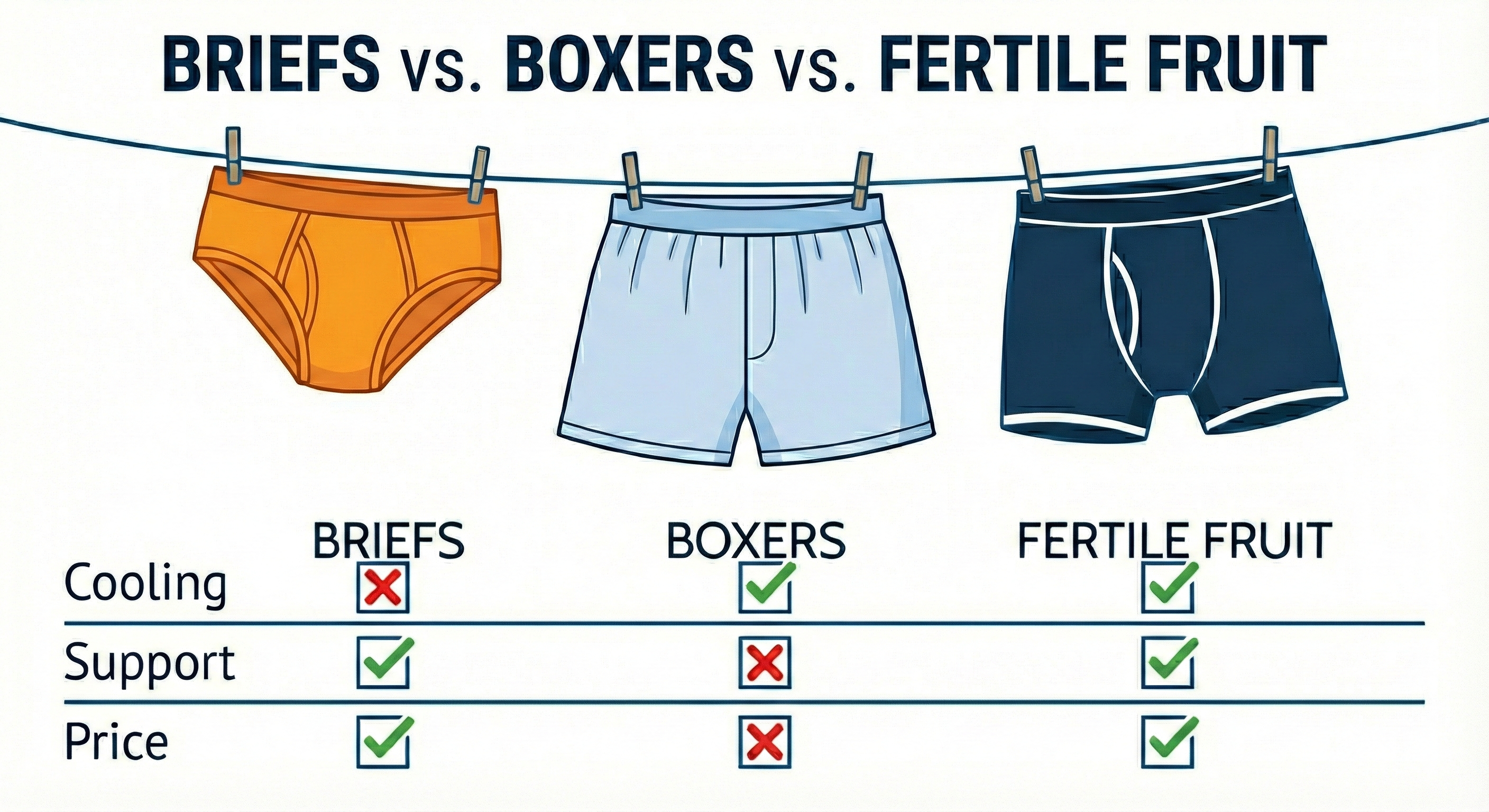
Embarking on the path to parenthood is a significant journey, and at Fertile Fruit, we believe in empowering men with the knowledge to support this process. Many factors contribute to male fertility, and one that is often overlooked is the type of underwear you choose. It may seem like a small detail, but the right choice can play a crucial role in creating an optimal environment for sperm health, making it an important consideration for every man trying to conceive. The Science Behind Scrotal Temperature Scientific studies have consistently shown that sperm production is optimal at a temperature slightly cooler than the rest of the body. Underwear that is too tight or made from non-breathable materials can trap heat, elevating scrotal temperature and potentially impacting sperm count and quality. This makes your choice of undergarment a key player. Fabric Matters: Breathability is Key When selecting the best underwear for men's fertility, the material is paramount. We recommend fabrics known for their breathability and moisture-wicking properties, such as micro-modal or high-quality cotton blends. These materials help dissipate heat and keep the area dry, fostering an ideal environment for maintaining healthy sperm and overall comfort throughout the day. The Boxer vs. Brief Debate The age-old debate between boxers and briefs has new relevance when discussing fertility. While traditional advice leans towards loose boxers to reduce heat, modern designs have changed the game. Specially engineered boxer briefs can now offer the support of a brief while ensuring ample space and breathability, providing a superior solution for men. Support Without Constriction The goal is to find a balance between adequate support and freedom. Underwear should secure everything comfortably in place without causing constriction or riding up, which can lead to overheating. A well-designed pair will feel like a second skin, supporting your daily activities while also supporting your fertility goals behind the scenes. Choosing the best underwear for men's fertility is a simple yet impactful step you can take on your conception journey. At Fertile Fruit, we are dedicated to providing solutions that help you do your part. Learn how our men's boxers can help you upgrade your odds. Shop Our Fertility Boxers
Learn moreFrom Sluggish to Supercharged: What Actually Works to Boost Sperm
Let’s be honest: this isn’t exactly a topic you want to bring up with your buddies over a beer. Sperm count and mobility aren’t things most guys talk about, but if you’re here, you probably already know these factors play a significant role in fertility. I may not be a doctor, but I’ve been down the rabbit hole of research… Late-night Googling and trying to make sense of all the conflicting advice. So, let’s cut the fluff—I’m here to share what I learned, guy to guy, in plain, no-BS terms. If you’re looking to boost your numbers and give your swimmers a fighting chance, here’s what you need to know. Spoiler alert: it’s not rocket science, but it does take some effort. Understanding the Basics First off, let’s break down the jargon. Sperm count is exactly what it sounds like—the number of sperm you’ve got swimming around in a single sample. Think of it as the size of your team. The bigger the team, the better your chances. Sperm mobility, on the other hand, is all about quality. It’s not just about how many sperm you’ve got—it’s about how well they can swim. Lazy swimmers don’t make it to the finish line, and that’s a problem. Both count and mobility are critical if you’re trying to conceive. Now, here’s the positive aspect: your sperm health isn’t set in stone. It’s heavily influenced by what you eat, how you live, and what you’re exposed to. Translation? You have more control over this than you think. Nutrition: Feeding Your Swimmers If you’re still living on fast food and sugary energy drinks, we’ve got a problem. Your swimmers need fuel, and the good stuff isn’t coming from a greasy cheeseburger. Here’s what actually helps: Antioxidants: These are like bodyguards for your sperm, protecting them from damage. Load up on berries, leafy green vegetables, and nuts. Zinc: Think of zinc as sperm’s secret weapon. You’ll find it in shellfish, pumpkin seeds, and lean meats. Omega-3s: These fats improve sperm structure and mobility. Fatty fish like salmon, walnuts, and chia seeds are your friends. Vitamin C and E: Citrus fruits, broccoli, and sunflower seeds are easy ways to boost your intake. These vitamins help keep your sperm in fighting shape. Let’s not forget what to avoid: processed junk, sugary sodas, and trans fats. If it comes in a box or a drive-thru bag, it’s probably not helping your cause. Lifestyle Tweaks for Better Sperm Health This part might sting a little, but here’s the truth: some of your habits could be drastically reducing your chances of conceiving. Here’s what to fix: Exercise Smart: Regular exercise improves testosterone and sperm health. But don’t overdo it—endurance workouts (like marathon training) can lower testosterone levels. Stick to balanced routines, and add in some weight training for good measure. Quit the Fertility Killers: Smoking, heavy drinking, and recreational drugs are sperm’s worst enemies. Seriously, cut them out. You’ll feel better, and your swimmers will thank you. Prioritize Sleep: This one is easy. Poor sleep zaps your energy and lowers testosterone, both of which are terrible for sperm health. Aim for 7-9 hours of solid sleep each night. Small changes here add up. You don’t have to overhaul your life overnight, but every step in the right direction counts. Heat and Toxins: Keeping the Factory Cool Here’s a fun fact: your boys need to stay cool to work their best. Too much heat can fry your sperm fast. Here’s what to watch for: Skip the Hot Tubs: Relaxing, sure! Just not worth the heat damage while you are trying to conceive. Saunas and long hot baths? Same deal. Mind Your Underwear: Tighty-whities are out. Boxer briefs can be too restricting. Opt for loose boxers or a comfortable and stylish pair of Fertile Fruit o keep things at an optimal temperature. Watch the Laptop: Sitting with your laptop on your lap might seem harmless, but the heat isn’t doing you any favors. Use a desk or lap stand while you WFH. And it’s not just heat—toxins are another big culprit. Pesticides, heavy metals, and chemicals in plastics can mess with your hormones and sperm quality. Look for ways to limit exposure, like choosing safer household products or wearing protective gear if you work with chemicals. Supplements: Boost or Bust? You’ve probably seen ads for fertility supplements promising miracle results. Some of them are legit, and some are just snake oil. Here are a few that have reputable science behind them: Zinc: Great for sperm production. CoQ10: Supports sperm motility. Vitamin D: Low levels are linked to poor sperm health. L-Carnitine: Shown to improve sperm mobility in some studies. Consult your doctor before adding anything new to your routine. Consistency is King The reality is that boosting sperm health takes time. You’re not going to see results overnight, so don’t expect a quick fix. Small, consistent changes over the course of a few months can lead to noteworthy improvements. It’s about progress, not perfection. Focus on what you can control: your diet, your lifestyle, and the choices you make every day. Every healthy meal, every good night of sleep, and every avoided vice adds up. Remember, this isn’t just about sperm—it’s about improving your overall health, which will only help in the long run. The Takeaway The whole topic of sperm health can feel overwhelming, embarrassing, or even downright discouraging. But after deep diving into the research, here’s what I can tell you: it’s in our control. Eat better, move smarter, ditch the bad habits, and take care of yourself. Avoid the heat and toxins, and consider adding in a few key supplements. And, hey, if a regular guy like me can figure this out after weeks of late-night Googling, so can you. Get on the right track, and give your swimmers the boost they deserve.
Learn moreSperm Superfoods: How to Eat Your Way to Better Swimmers
If you are here, you are curious about diet changes that can impact sperm health. You may be at the very start of your trying-to-conceive (TTC) journey, or maybe you’ve been striking out for some time. Whatever the case, here’s the truth: what you eat can make or break your fertility success. Forget quick fixes and magic pills. Sperm health is a long game, and it starts with what’s on your plate. Lucky for you, I’ve done the research so you don’t have to. Here’s the no-nonsense guide to eating like you care about your swimmers. Step 1: Feed Your Fertility Your sperm need fuel to function. The better the fuel, the better the performance. Here’s what you should be loading up on: Zinc: The Fertility MVPThis mineral is a game-changer. It boosts testosterone, improves sperm production, and even protects sperm from damage. Want more zinc in your life? Start slurping oysters, munching on pumpkin seeds, or digging into some lean beef. Bonus: chickpeas are loaded with zinc, too - so don’t skip the hummus. Antioxidants: Sperm’s BodyguardsOxidative stress is like kryptonite for your swimmers—it weakens their DNA and messes with their mobility. That’s where antioxidants come in, suiting up as the ultimate defense team. Sure, berries, dark chocolate, spinach, and kale are all stars, but there’s more to the lineup. Toss in some sweet potatoes for beta-carotene, munch on pomegranate seeds for their supercharged antioxidant punch, or sip on green tea for a quick hit of epigallocatechin gallate (EGCG), a fancy compound that fights oxidative damage. Nuts and seeds, especially pecans and sunflower seeds, are also antioxidant powerhouses. And don’t forget tomatoes, which are rich in lycopene—a nutrient linked to better sperm count and motility. Want a convenient snack? Try an antioxidant-packed trail mix with dried berries, dark chocolate chunks, and nuts, or whip up a pomegranate and spinach salad. The more variety, the stronger the shield. Omega-3 Fatty Acids: The Swimmer BoostersOmega-3s improve sperm structure and mobility, essentially turning your swimmers into high-performance athletes. These healthy fats help strengthen the cell membranes, making your sperm more resilient and efficient. Think of them as the secret sauce for better motility. Load up on salmon and mackerel, but don’t stop there—walnuts, chia seeds, and flaxseeds pack a serious Omega-3 punch too. Not a fish fan? Try fortified eggs or even algae-based Omega-3 supplements. Vitamin C and E: The Power PairThese vitamins aren’t just for fighting colds—they’re sperm powerhouses. Vitamin C helps boost sperm count and protect against oxidative stress, while Vitamin E works like a shield, guarding sperm from DNA damage. Together, they’re the ultimate tag team for stronger, healthier swimmers. Oranges, kiwis, almonds, and sunflower seeds are great starting points, but don’t stop there. Bell peppers, strawberries, and spinach also pack a vitamin punch. Add some variety to your meals with papaya or avocado, both rich in these fertility-friendly nutrients. Want a simple fix? Blend a smoothie with citrus, spinach, and a handful of nuts for a daily dose of sperm-boosting goodness. Folate: The Unsung HeroFolate isn’t just for women—it’s been linked to higher sperm count and better quality. Leafy greens, beans, and fortified cereals are folate gold mines. Selenium: The Mobility MakerSelenium helps sperm swim faster and more efficiently. Brazil nuts are your go-to here—just one or two a day gets the job done. Step 2: Stock Your Kitchen with Fertility Powerhouses Building a fertility-friendly diet is pretty simple. Focus on real, whole foods. Here’s your grocery list: Fatty fish like salmon and sardines. Lean meats and poultry. Whole grains like quinoa and brown rice. Fresh fruits and vegetables, especially leafy greens, citrus fruits, and berries. Nuts and seeds, including walnuts, almonds, and pumpkin seeds. If it looks like it came out of a vending machine or in a fast-food bag, skip it. Your swimmers deserve better. Step 3: Ditch the Fertility Killers If you’re serious about improving your sperm health, it’s time to cut out the junk. Here’s what’s dragging your swimmers down: Processed Foods: Loaded with trans fats and sugars, these tank testosterone and mess with sperm production. Soy Overload: Too much soy can mimic estrogen and throw your hormones out of whack. Keep it moderate. Caffeine Bombs: A little coffee is fine, but guzzling energy drinks? Not so much. Keep caffeine under control. Booze: Heavy drinking can wreck your sperm count and quality. Limit yourself to occasional drinks or cut it out altogether. Artificial Sweeteners: Some studies suggest they may negatively impact sperm, so why take the risk? Your diet isn’t just about adding the right stuff—it’s also about cutting the crap that’s holding you back. Step 4: Stay Hydrated Water intake is paramount in enhancing fertility. Dehydration doesn’t just leave you sluggish—it also impacts sperm volume and motility. Skip the sugary sodas and stick to water, herbal teas, or natural juices. Step 5: Play the Long Game Here’s the thing: sperm takes about 74 days to develop. That means the changes you make today won’t show up for a couple of months. It’s like training for a marathon—you’ve got to put in the work consistently to see results down the road. Start small. Add one or two fertility-friendly foods to your meals each week. Swap processed snacks for nuts and fruits. Commit to drinking more water and cutting back on booze. Over time, these changes add up, and your swimmers will thank you. Step 6: Supplement Smart Supplements can be a great way to fill in nutritional gaps, but they’re not a magic bullet. Here are a few worth considering: Zinc: Essential for sperm production. CoQ10: Supports sperm mobility and overall health. Vitamin D: Low levels are linked to poor sperm quality. L-Carnitine: Can improve sperm mobility. Just remember, supplements should enhance a healthy diet—not replace it. And always check with a doctor before diving into a supplement routine. Step 7: Your Plate, Your Power At the end of the day, your fertility is in your hands—literally, on your plate. What you eat today can shape your chances of conceiving tomorrow. So, take control. Load up on the good stuff, ditch the junk, and stay consistent. This isn’t just about making better sperm—it’s about being healthier, feeling better, and showing up for the future you want.
Learn moreBreaking the Silence: Your Role in Overcoming Infertility
If you’ve been trying to conceive without success, you’re probably caught in a whirlwind of questions and growing frustrations. Let’s be real - the thought of infertility can be scary and discouraging. Here you are, ready to grow your family - but you have an unforeseen & unexpected barrier standing in your way. For most men, infertility is not a topic of conversation among friends. There is a social pressure to bottle up the anxiety that comes with infertility, and to carry the weight alone. Maybe you’ve done some Googling or thought about seeing a doctor. Smart move if you’re worried. But here’s the deal: there’s more to this than just a diagnosis. You have options, steps you can take, and simple changes you can make to boost your chances of conceiving. The best part? You don’t have to face this battle solo. Let’s dive into what you can do, how it works, and why it matters. Male Factors in Infertility Infertility is often seen as a women’s issue, but the truth is that male factors contribute to up to 50% of cases. Despite this, male infertility doesn’t get nearly enough attention. The bottom line? Your fertility plays a critical role in conception. Understanding what’s at stake is the first step toward improving your chances. Male infertility comes down to the health and function of sperm. There are three key players in the game: sperm count, motility, and morphology. Sperm count: Simply put, it’s a numbers game. The fewer sperm you have, the lower the odds. Motility: Sperm need to swim like Olympians to reach the egg. If they’re slow or uncoordinated, their chances of implantation drop fast. Morphology: Misshapen sperm don’t get the job done. Healthy, properly shaped sperm are more likely to fertilize the egg. On top of that, DNA fragmentation can throw another wrench in the works. When a sperm’s genetic material is damaged, it’s harder to conceive, and the risk of miscarriage increases. What causes these issues? A mix of factors, including: Medical conditions like varicoceles (those pesky enlarged veins in the scrotum), hormonal imbalances, or infections. Lifestyle choices like smoking, drinking too much, poor eating habits, or skipping the gym—all of which tank sperm quality. Environmental factors such as exposure to toxins (think pesticides or heavy metals) or excessive heat from sources like hot tubs or tight, unbreathable underwear. The harsh truth is that these factors often fly under the radar, but they matter—a lot. Male infertility isn’t something to brush off or ignore. If you want to increase your chances of success, it’s time to step up and take responsibility for your role. It’s not about blame; it’s about action. Taking Responsibility: Why Your Role Matters It’s time to stop pretending male infertility isn’t a big deal. The truth is, your role in this process is crucial, and ignoring it won’t help anyone. Prioritizing changes to promote fertility isn’t something you can leave entirely up to your partner, it’s a shared responsibility. If you’re serious about building a family, it’s time to take ownership. Improving your fertility isn’t just about increasing your chances of conception. It’s about showing your partner that you’re willing to step up and do your part. This isn’t a passive process. It requires effort, discipline, and a commitment to making changes that matter. Maybe it’s hard to face the idea that your habits, environment, or health could be part of the problem... Avoiding this harsh truth won’t make it go away. Acknowledging the role male factors play is the first step toward finding solutions. The reality is, the better your sperm health, the better your chances. It’s as simple as that. So, ask yourself: are you doing everything you can to better your own fertility? When you do, you are also strengthening your partnership in proving that you’re dedicated to building a family and showing you’re ready to make any necessary changes and sacrifices. Steps to Boost Your Fertility Your daily choices directly impact your fertility. Sure, your morning coffee won’t kill your chances, but guzzling caffeine all day? That’s a different story, it can tank your sperm quality. And those long, stressful workdays? They’re not just exhausting, they mess with your hormones which lowers testosterone and slows sperm production. Take a hard look at your daily routine. Are you getting enough sleep? According to the National Institutes of Health, skimping on sleep doesn’t just drain your energy—it crushes testosterone levels, which are essential for sperm production. Aiming for 7-9 hours of quality sleep can make a huge difference. Changes you can make now: Revamp Your Diet: If you’re still living on takeout and processed junk, it’s time to upgrade. Eat foods loaded with antioxidants, zinc, and omega-3s. Think berries, leafy greens, nuts, and fatty fish. These nutrients shield sperm from damage and support production. Get Moving: Regular exercise boosts overall health and keeps your weight in check, which is critical for fertility. However, don’t go overboard! Extreme endurance workouts can actually your lower testosterone. Keep it balanced. Ditch Harmful Habits: Smoking, binge drinking, and recreational drugs? Fertility killers. Dropping these habits can dramatically improve sperm health. Mind Your Environment: Love lounging in hot tubs or saunas? Think again. Prolonged heat exposure can fry your sperm quality, so keep your soak sessions short. Switch to looser underwear and cut back on exposure to toxins like pesticides or heavy metals—whether at work or at home. Prioritize Self-Care: Stress isn’t just bad for your mood, it’s bad for your fertility too. Find ways to relax and unwind—whether that’s hitting the gym, picking up a hobby, or getting outside for some fresh air. Mindfulness practices like meditation or deep-breathing exercises can also help keep you centered and resilient. Seek Medical Help: If lifestyle changes aren’t moving the needle for you, don’t waste time. Consult a doctor to explore medical options, which range from medications to assisted reproductive technologies like IVF or IUI. Here’s the bottom line: fertility isn’t just luck—it’s discipline. These changes aren’t about perfection, they’re about stacking the odds in your favor. Take charge, make the effort, and give yourself the best shot possible. Discipline and Dedication: Putting in the Work There are no shortcuts when it comes to fertility. This isn’t about quick fixes or overnight results. If you want to improve your chances, it’s going to take consistent effort and real dedication. The question is: are you ready to put in the work? Discipline is key here. Sticking to a plan—whether it’s adjusting your diet, cutting out bad habits, or staying on top of your health—requires commitment. It’s not always easy, but the payoff is worth it. Every step you take moves you closer to your goal, and every small improvement can make a big difference when it matters most. This isn’t just about you, either. Fertility is a team effort, and your partner is counting on you to do your part. Open communication with your partner is key. This includes talking honestly about your challenges and goals to strengthen your bond and keep you aligned as a team. Supporting your partner means taking responsibility for what you can control and making choices that set you both up for success. This is about showing up for your future family, proving that you’re all in. Fertility isn’t a spectator sport—it’s about action, persistence, and owning your role in the process. Buckle down, stay focused, and make it happen. Your effort could be the game-changer. Take a deep breath. It’s time to show up and make it happen. You’ve got this.
Learn more